Client
Drone Flight Academy
Service
UX & Conversion
Designing a conversion-focused learning platform for drone pilots
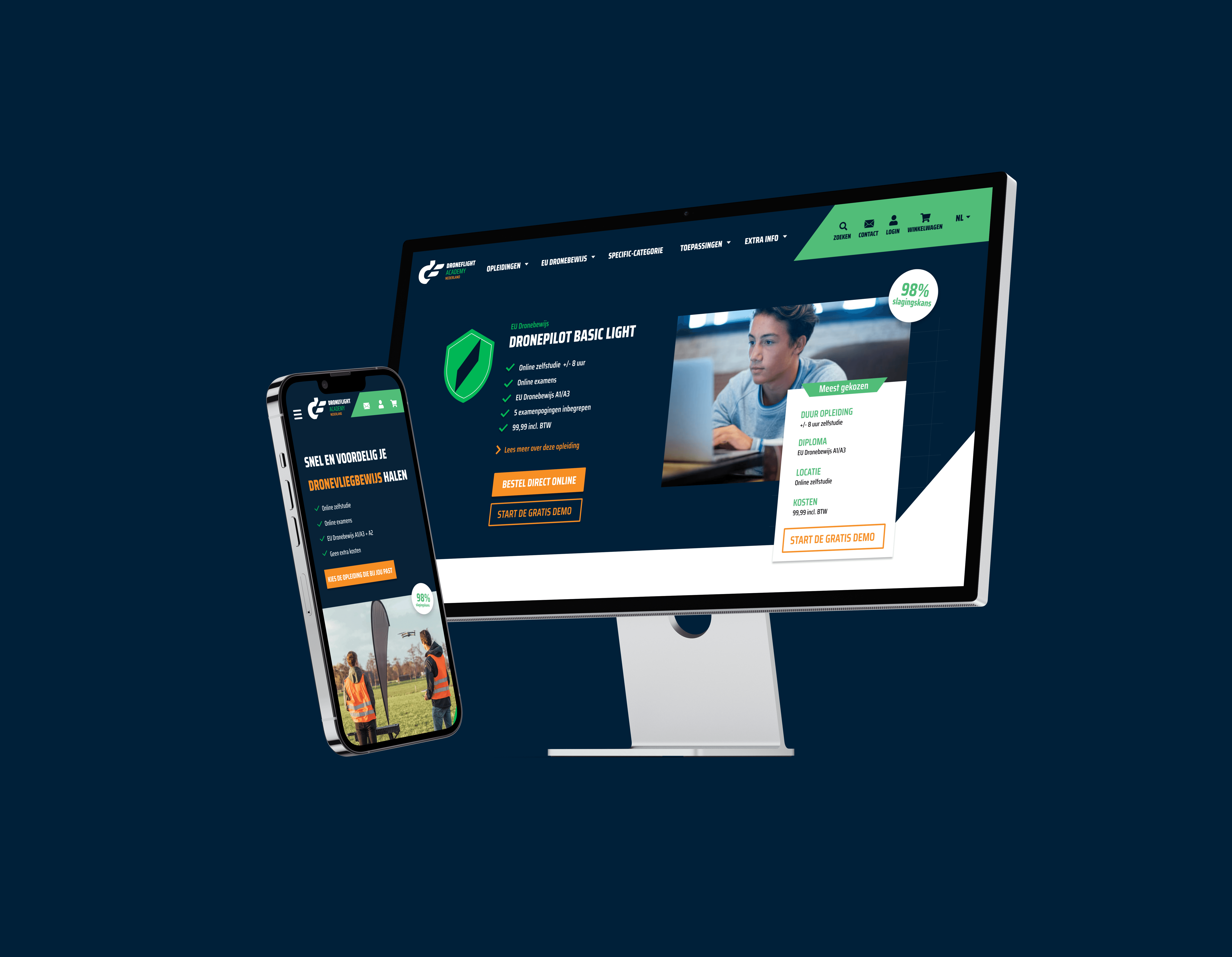
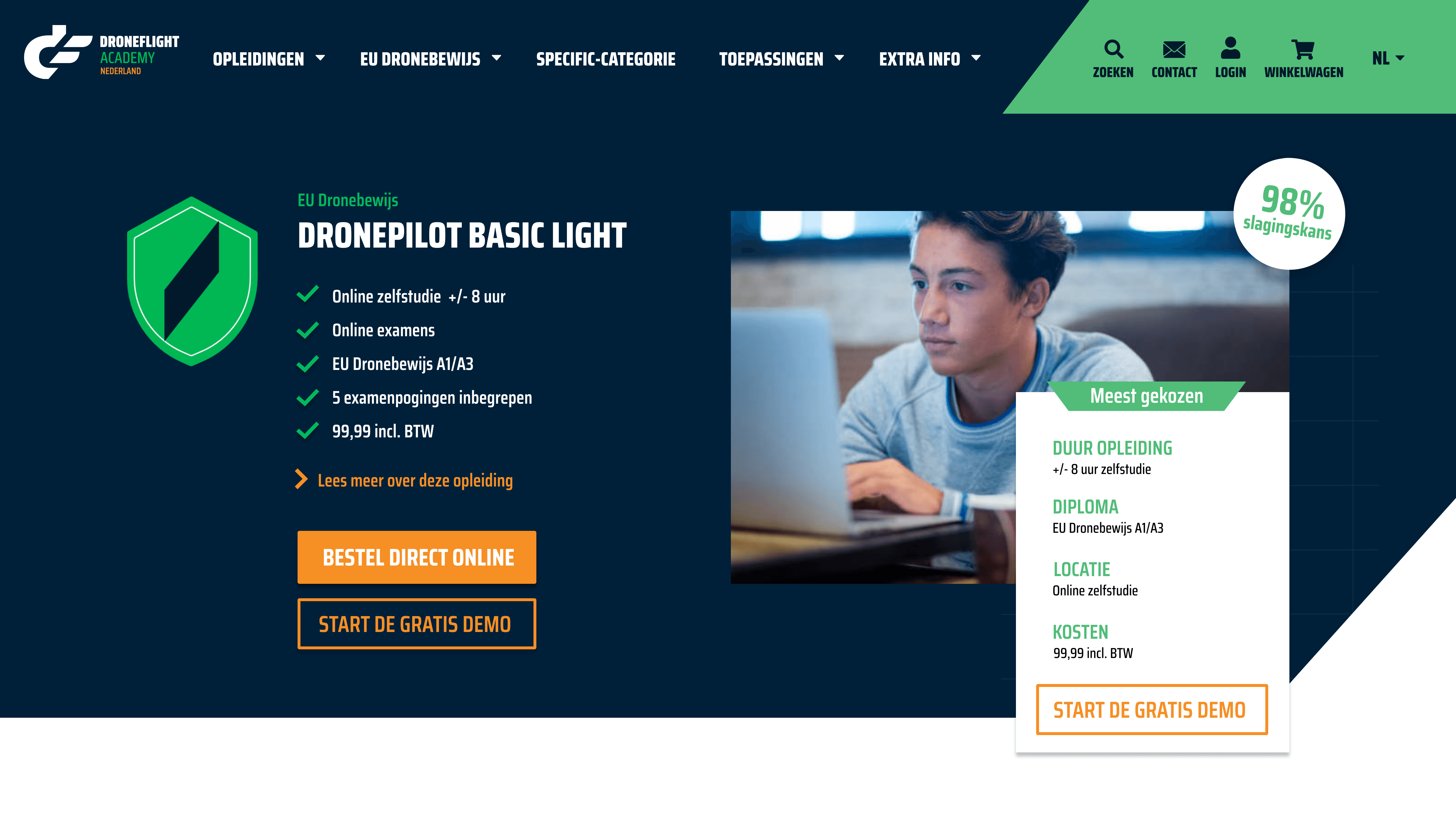
Drone Flight Academy is an online learning platform where users can obtain their official EU drone pilot certificate. The platform offers a range of courses tailored to the user’s drone type, weight class, and level of experience. I worked on improving the platform’s user experience and conversion. My focus was on simplifying complex decision-making, building user trust, and optimizing key conversion moments such as course selection and the checkout flow.
Design process
- UX research & conversion analysis - Information architecture & flows - Wireframing key pages & UI designs - Iterative design & feedback
During this project, I worked closely with the client to improve the user experience and conversion performance of the Drone Flight Academy platform. Operating in a highly regulated and trust-sensitive domain, the platform required a careful balance between compliance, clarity and commercial objectives.
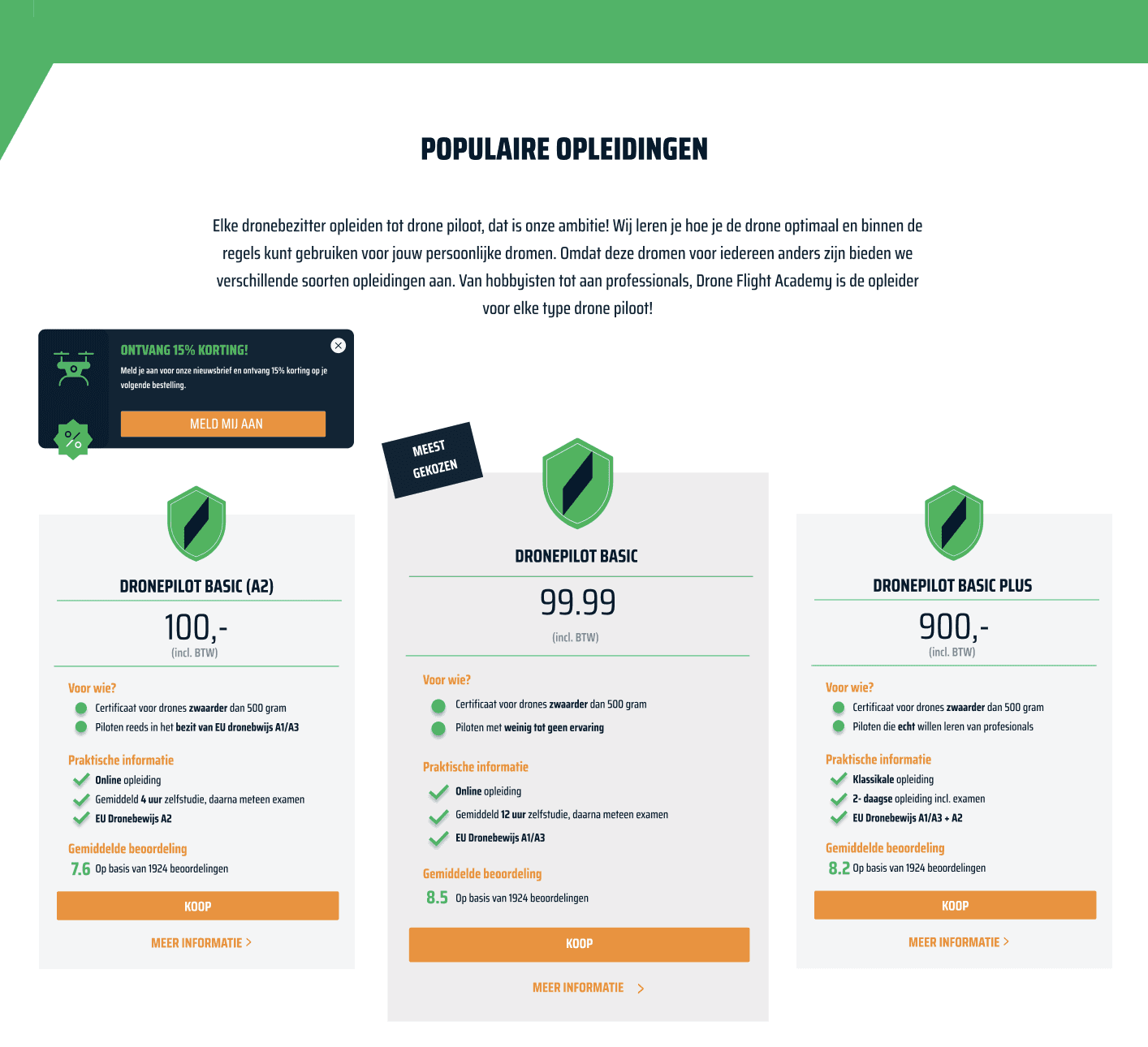
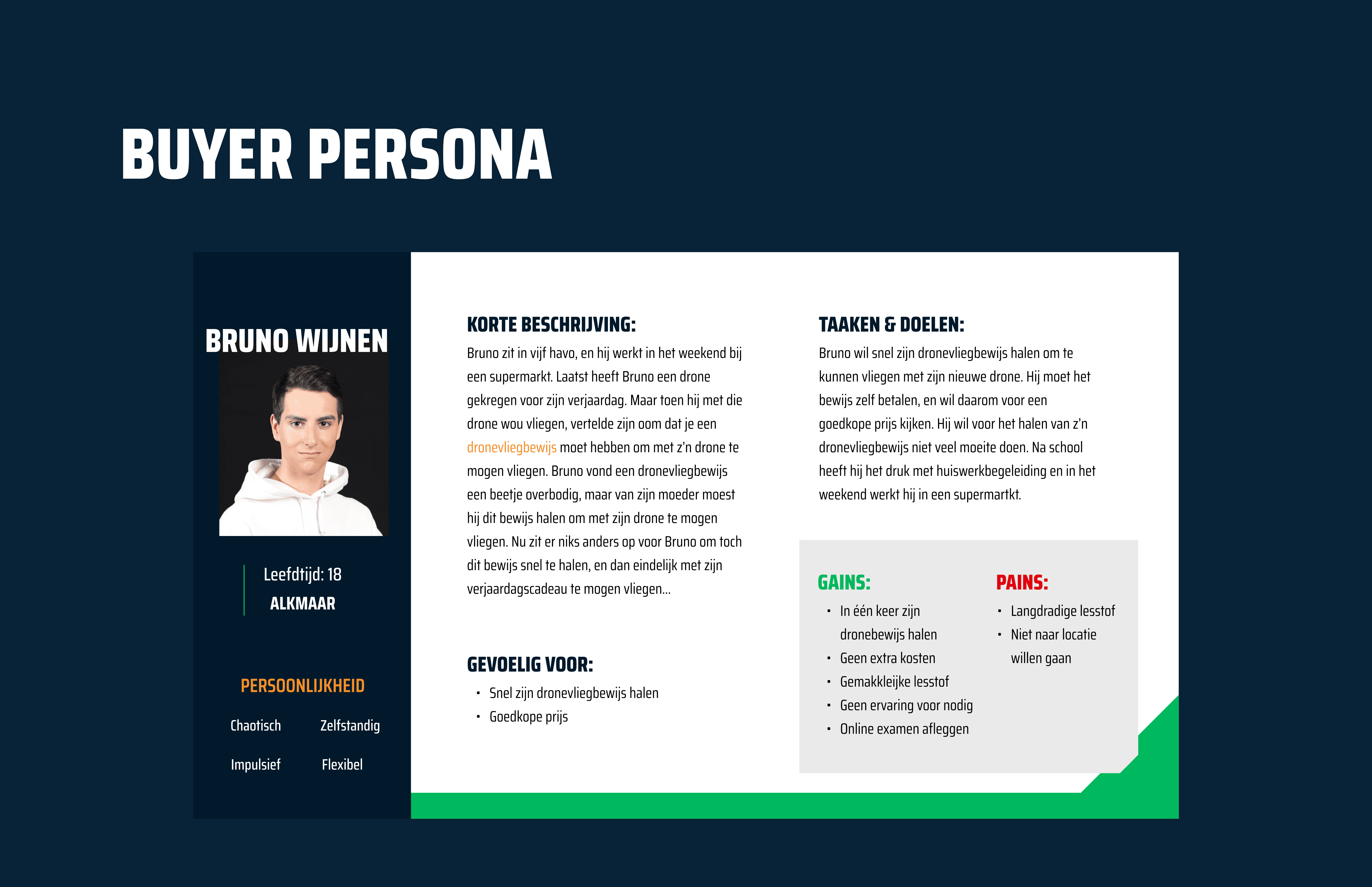
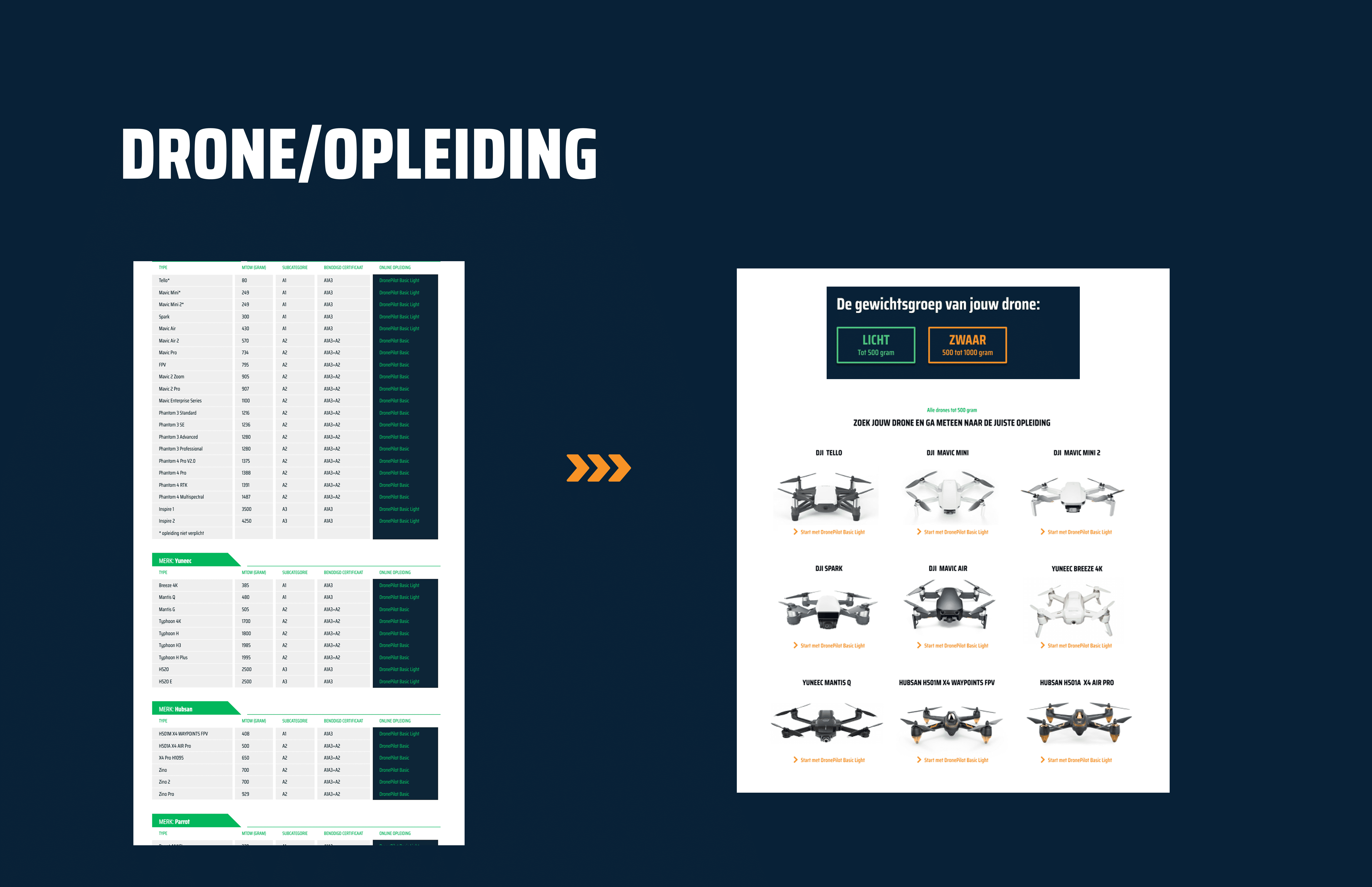
Through UX analysis, stakeholder discussions and interviews, I identified that users mainly struggled with decision making during course selection. The challenge was not a lack of content, but cognitive overload and uncertainty about choosing the right training.
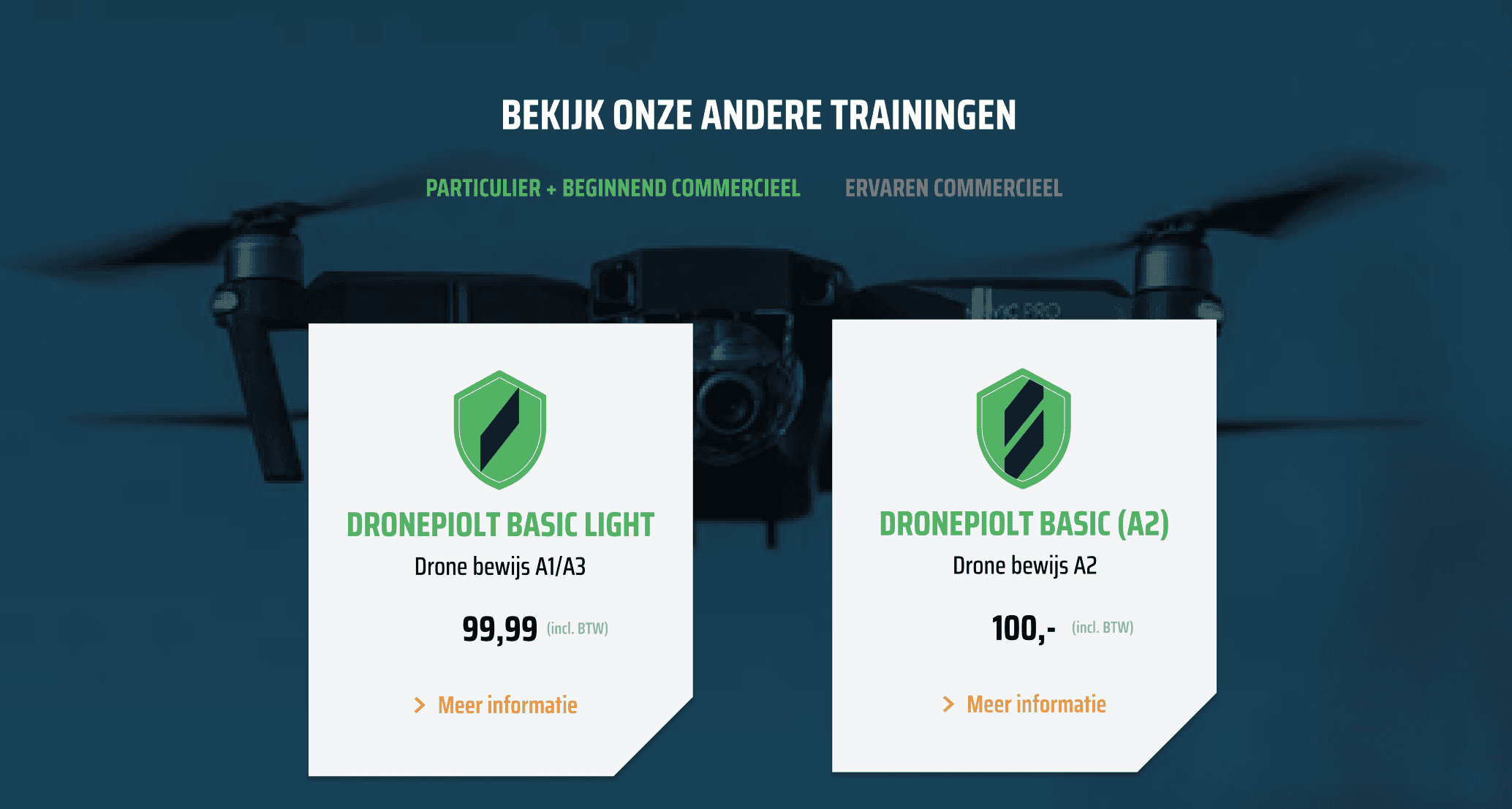
My role focused on simplifying this decision process by redesigning the information architecture and user flows. Instead of presenting all options simultaneously, I structured the experience around progressive disclosure. Users were guided step by step based on their drone type, weight class and experience level, reducing friction while maintaining completeness and compliance.
Throughout the process, I combined qualitative insights with iterative validation. Wireframes and prototypes were refined through feedback loops with both users and the client, ensuring alignment between user needs and business goals. I translated research findings into clear design decisions and facilitated discussions around trade-offs between usability and regulatory requirements.
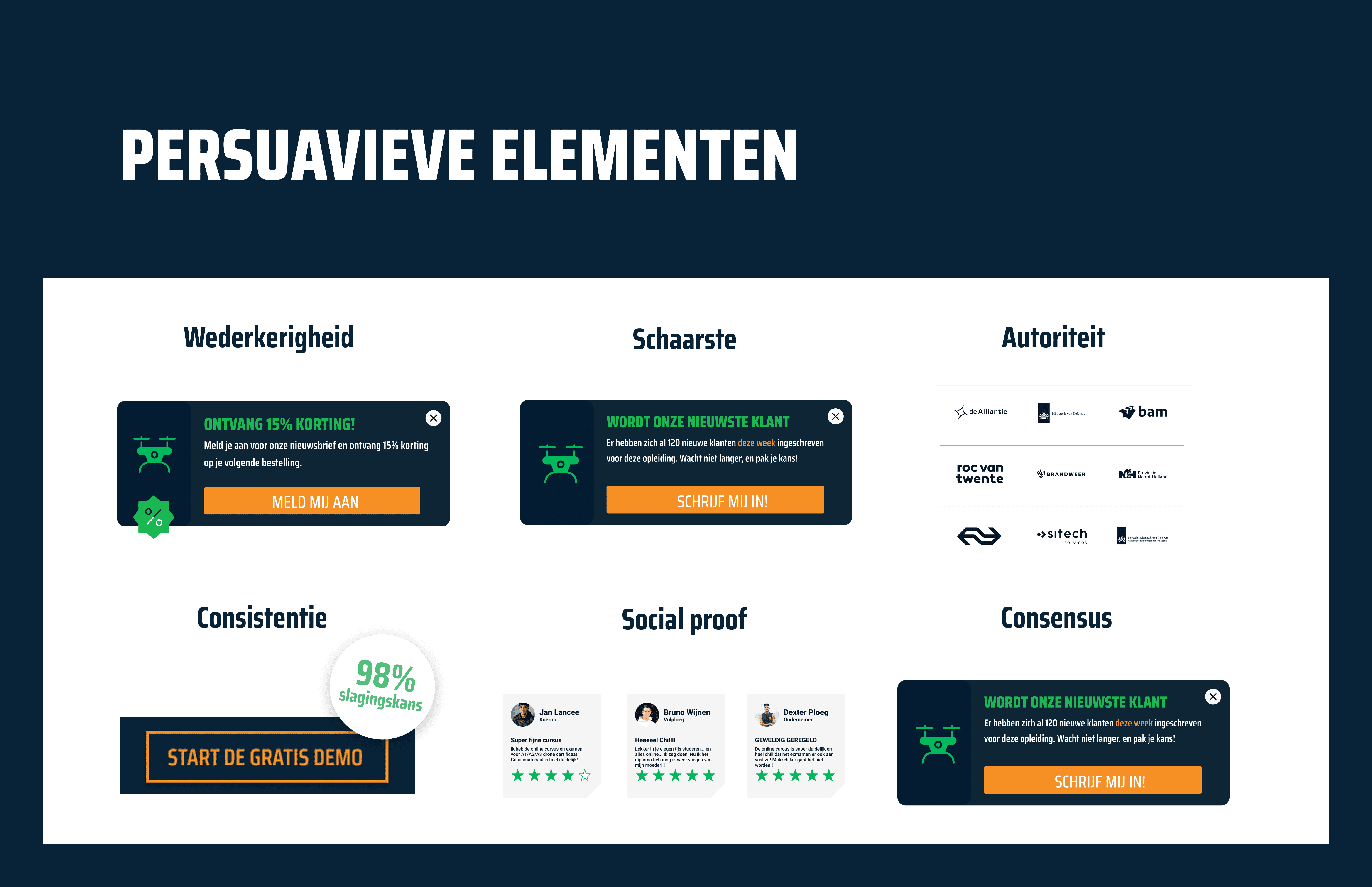
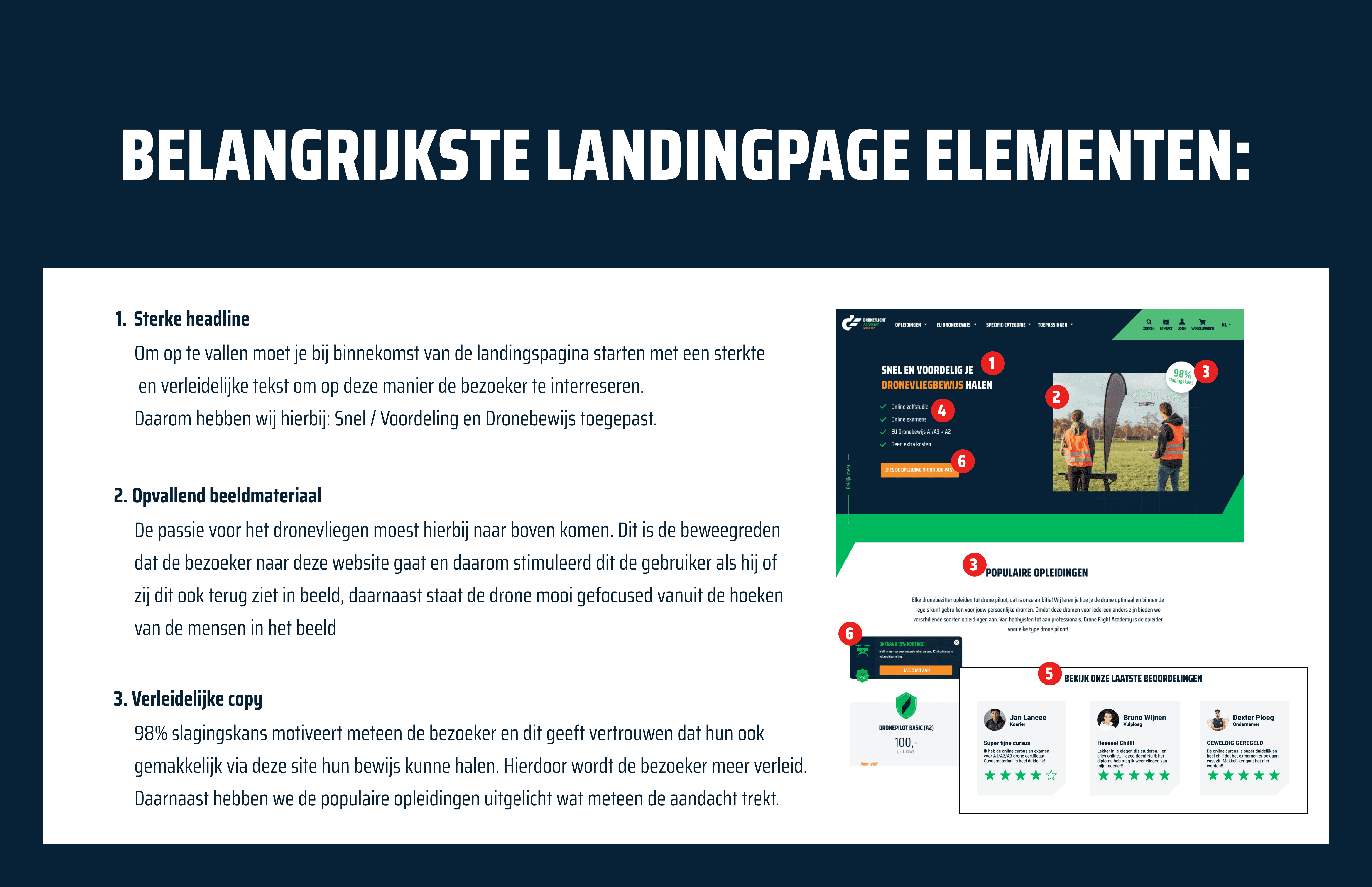
To strengthen trust at key conversion moments, I strategically applied persuasion principles such as social proof, credibility indicators and transparent communication. Success rates, reviews and recognised partners were positioned where users typically hesitate, reinforcing confidence without overwhelming the interface.
Conversion optimisation focused on reducing friction in the course selection and checkout flow. Clear progress indicators, consistently placed call-to-actions and mobile-first thumb-friendly positioning improved flow continuity and usability. Accessibility and production readiness were considered to ensure smooth implementation.
This project strengthened my ability to design within complex and regulated environments, balancing clarity with completeness.